


By the Tijuana Dispensary Expert Team | Updated July 2026 | 8 min read
Disclaimer: This article is for informational purposes only and does not constitute medical advice. Always consult a qualified healthcare professional before starting any CBD regimen.
Most Australians buying CBD oil make the same costly mistake: they copy someone else’s dose. A friend says “I take 25mg a day and it changed my life,” so you try 25mg — and feel absolutely nothing. Or worse, they take too much too fast and write off CBD entirely.
Here’s the uncomfortable truth that no CBD retailer wants to admit: there is no universal CBD dose. What works brilliantly for a 60kg woman managing sleep disruption will barely touch the surface for a 95kg man dealing with chronic joint inflammation. At Tijuana Dispensary, we’ve seen this play out with our customers across Australia every week. So we built this guide around the real science of CBD absorption, body chemistry, and condition-specific dosing — not marketing fluff.
Why “Start Low and Go Slow” Is Only Half the Story
You’ve heard “start low and go slow.” That’s good advice, but it’s incomplete without knowing what low means for you specifically. Preliminary research published in Frontiers in Pharmacology suggests a starting dose range of 1–6 mg of CBD per 10 kg of body weight, depending on the condition being addressed. Here’s how that breaks down in practice:
| Body Weight | Low Dose (Mild Relief) | Mid Dose (Moderate Support) | High Dose (Strong Support) |
|---|---|---|---|
| 50 kg | 5–15 mg/day | 15–30 mg/day | 30–60 mg/day |
| 70 kg | 7–21 mg/day | 21–42 mg/day | 42–84 mg/day |
| 90 kg | 9–27 mg/day | 27–54 mg/day | 54–108 mg/day |
The “low dose” column is your starting point for the first two weeks. Increase by 5mg every 7 days and keep a simple diary logging sleep quality, pain levels, and anxiety on a scale of 1–10 each morning and evening. Your effective dose is the point where those numbers consistently improve — not the highest dose on the shelf.
The Method You Use Changes Everything: Sublingual vs Oral vs Vaporised
One reason people get confusing results with CBD is that they switch delivery methods mid-experiment. Each one has a completely different bioavailability profile — meaning the percentage of CBD that actually reaches your bloodstream.
Sublingual (under the tongue): This is the gold standard for most Australian users. Holding oil under your tongue for 60–90 seconds allows CBD to absorb directly through the sublingual mucosa and into the bloodstream, bypassing first-pass liver metabolism. Bioavailability sits around 13–35%, and onset typically begins within 15–45 minutes. This is why our CBD oil products are designed for sublingual use — consistent, measurable, and predictable.
Oral/Swallowed: When you swallow CBD oil directly or take it in capsule form, it passes through your digestive system and liver before reaching the bloodstream. This drops bioavailability to roughly 6–19% and delays onset to 1–3 hours. The upside is longer duration — effects can stretch to 6–8 hours, making it useful for all-day support.
Vaporised: The fastest onset (within 3–10 minutes) and highest bioavailability (34–56%), but the effects tend to be shorter-lived. Best for acute moments — sharp anxiety spikes, breakthrough pain, or sleeplessness that hits at 2am.
The practical implication: if you switch from sublingual to swallowed without adjusting your dose, you may be getting significantly less CBD per milligram. Always recalibrate when you change methods.
Does Your CBD Oil’s Quality Affect Your Required Dose?
Yes — dramatically. Not all CBD oils are created equal, and Australia’s market has a wide variance in product quality. There are three factors that directly impact how much of the labeled dose you actually receive:
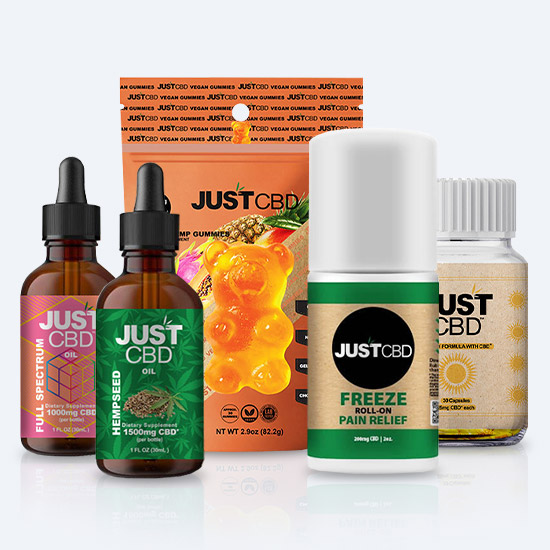
1. Carrier oil quality. CBD is fat-soluble. Products formulated with MCT (medium-chain triglyceride) oil — particularly C8 MCT — show superior absorption compared to cheaper carrier oils like sunflower or olive. Our 4000mg THC/CBD Oil and JustCBD Full Spectrum 1500mg both use quality carrier formulations for this reason.
2. Full spectrum vs isolate. Full-spectrum CBD oils contain the full array of cannabinoids, terpenes, and flavonoids from the hemp plant, triggering what researchers call the “entourage effect” — where compounds work synergistically to enhance each other’s action. Anecdotally, many users report needing 30–40% less full-spectrum CBD to achieve the same results as an isolate product. Our CBD Distillate and Crede Cold-Pressed CBD represent different ends of this spectrum.
3. Third-party lab testing (COA). A Certificate of Analysis from an accredited independent lab is the only way to verify that the mg stated on the label is what’s actually in the bottle. Unverified products can vary by up to 40% from their label claims. Always ask for a COA before buying CBD oil from any Australian supplier.
Condition-Specific Starting Frameworks
While individual response varies, here are commonly cited starting ranges for specific conditions, drawn from published clinical research and patient-reported data in Australian medicinal cannabis registries:
Sleep disruption: 25–75mg taken 1 hour before bed, sublingually. Many users find that lower doses (25–40mg) are paradoxically more effective for sleep than higher doses, which can occasionally be stimulating.
Anxiety and stress: 15–50mg per day, split into morning and evening doses. Research on CBD for generalised anxiety disorder shows most benefit in the 300–600mg per day range for clinical anxiety — though this level requires a prescription-strength product in Australia.
Inflammation and joint discomfort: 15–35mg twice daily, consistently for at least 4 weeks before evaluating results. Anti-inflammatory effects appear to be dose-dependent and cumulative, meaning short trials often underestimate CBD’s potential.
General wellness: 10–25mg daily is a widely used maintenance dose for people seeking preventative support rather than acute symptom relief.
When to Reassess and When to Stop
If you’ve been consistent for 4–6 weeks with no noticeable improvement at a mid-range dose, it’s worth considering:
- Switching from isolate to full spectrum
- Switching delivery method (e.g., from oral to sublingual)
- Consulting with your GP about whether prescription-strength CBD may be appropriate
CBD should always complement — not replace — a conversation with your healthcare provider, especially if you’re on blood thinners, antidepressants, or antiepileptics, as CBD can affect how these drugs are metabolised via the CYP450 enzyme system.
The 30-Day CBD Dose Optimisation Protocol
Here’s the exact protocol our customers have found most effective:
Week 1: Start at your calculated “low dose” sublingually, morning and night. Log daily.
Week 2: Add 5mg to your evening dose only. Continue logging.
Week 3: If no meaningful improvement, add 5mg to your morning dose as well.
Week 4: Evaluate your journal. Identify the dose at which you noticed the clearest improvement — that’s your “effective dose.” Maintain it for another 30 days before any further changes.
This systematic approach removes guesswork and gives you real data about your CBD response — not anyone else’s.
Ready to Start?
Browse Tijuana Dispensary’s full CBD oil range — from our entry-level Cinnamon CBD Hemp Oil to our premium 4000mg THC/CBD Oil. Not sure where to start? Contact our team directly — we’re here to help you find the right product and the right dose for your goals.
Frequently Asked Questions
How long does it take for CBD oil to work in Australia?
With sublingual delivery, most users notice initial effects within 15–45 minutes. For oral ingestion, allow 1–3 hours. Consistent daily use over 4–6 weeks typically delivers the most meaningful results.
Can you take too much CBD oil?
CBD has a strong safety profile. The WHO has classified it as well-tolerated in most humans. That said, very high doses (above 150mg/day for OTC products in Australia) require a prescription, and excessive doses can cause fatigue, loose stools, or changes in appetite in some individuals.
Does body weight affect how much CBD I need?
Yes — body weight, metabolism, and body fat percentage all influence CBD dosing. Heavier body mass generally requires a higher dose to achieve the same therapeutic effect, though individual response varies considerably.
Sources: Frontiers in Pharmacology (2019); WHO Critical Review of CBD (2019); TGA Guidance on Medicinal Cannabis (2026); Australian medicinal cannabis patient registry data.